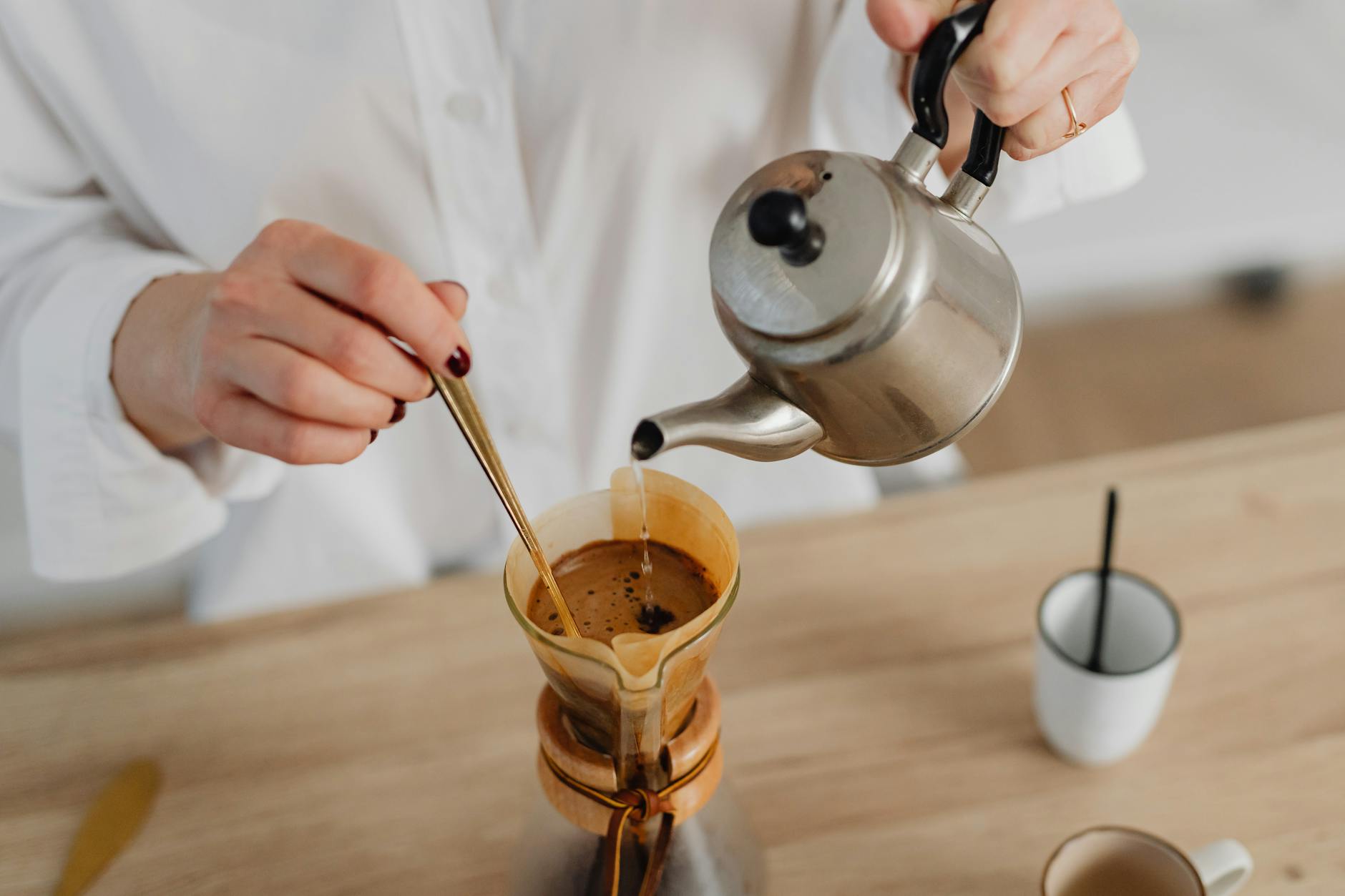
Right, you lot. Gil here, your resident caffeine obsessive and (admittedly slightly ridiculous) coffee guru. Let’s talk about the pour-over. This isn’t your average drip machine, mind you. This is an art form, a meditative process, a… well, let’s just say it’s something I take *very* seriously. And you should too, even if you just slap some instant granules in a mug. Actually, especially if you do that. You need to improve your life immediately. Unless, of course, you’re one of those people who secretly prefers instant coffee. Don’t tell anyone, but…I have a stash of that stuff just in case of emergency situations, like a sudden, unexpected absence of my freshly roasted beans.
The Equipment: Beyond the Basic Mug
First, let’s address the tools of the trade. Forget those flimsy plastic contraptions. We’re talking quality here, folks. A good pour-over device is an investment – think of it as a long-term investment, like those vintage bourbon stocks I used to hawk in my heyday. And no, I’m not talking about crypto—that’s still gibberish to me. I stick to things I understand.
Your options range from classic Hario V60s to more modern designs. The key is choosing a ceramic or glass dripper, ensuring consistent temperature, and allowing for even water distribution. A gooseneck kettle is your next essential. Believe me, the swan-necked spout provides unparalleled control for those vital, precise pours. Now, the grind. This isn’t something to approach lightly! You want a medium-fine grind, consistent and without excessive fines, or else you risk over-extraction and bitterness. I use a hand grinder, naturally. My fingers are still quite capable of managing its precise cranking, so it saves me the effort of pushing some buttons.
Water is Key, My Friends
Now, the water. This isn’t something to skimp on. The quality of your water significantly impacts the taste of your brew. I triple-filter mine, you know, for those impurities and minerals that would insult the delicate notes of my beans. The ideal temperature hovers around 200°F (93°C) – too hot, and you’ll burn the beans; too cold, and you’ll get under-extraction. That’s where a thermometer comes into play. I’ve even been known to use two, three if I’m being exceptionally neurotic about it, but that’s my own personal touch.
Here’s a fascinating fact: water hardness and mineral content impact flavor profiles significantly. According to the National Coffee Association USA, the mineral content can change the taste dramatically. Believe me, this isn’t something to dismiss lightly. You wouldn’t invest in a stock without researching the market, would you? The same applies to your daily brew. This isn’t something to rush either, of course.
Grind Size and Pouring Techniques
The grind size, as I mentioned, is absolutely crucial. Too coarse, and you’ll get a weak, watery brew; too fine, and you’ll end up with bitter sludge. I’ve spent years – nay, decades – perfecting my grinding technique, which involves a highly ritualistic sifting process that somehow makes even my fellow mug collectors raise an eyebrow. Remember, this is an art, not a race.
Next up is the pouring technique. A slow, steady pour is key to ensuring even extraction. You want to saturate the grounds completely, but gently, in a circular motion. Think of it as a delicate dance between you and your coffee beans. It’s a bit like trading stocks—a steady hand and careful consideration are crucial to success, but a little flair won’t hurt, either.
Beans, Roasting, and Storage: A Connoisseur’s Musings
Of course, let’s not forget about the star of the show: the coffee beans themselves. I buy my green beans directly from the source. I’ve already mentioned that I roast them at home, in a little machine which has an interesting backstory, but it’s rather long, so we’ll skip that today.
Proper storage is also vital to preserving the freshness and aroma of your beans. I use airtight containers, kept in a cool, dark place, far away from any strong odors, and that certainly includes that ‘creative coffee mug’ of mine. Yes, I did get a bit of a kick out of that one, but it’s a bit too ostentatious for my taste, if I may be honest.
The roasting process, like the brewing itself, is a delicate balance. You want to achieve a specific level of roast, depending on the beans and your personal preference. But that is a topic for another day. For now, that is more than enough of coffee related details. I’m quite certain at this point your heads are about to explode. My apologies to those who were hoping for more tips. I have a feeling that would only create even more coffee related questions.
The Final Pour: A Moment of Zen
The final pour is a moment of quiet satisfaction, a reward for your meticulous efforts. Enjoy this moment—take a moment to truly admire your creation. And even though I often don’t understand the music my friends enjoy, I fully understand their respect for the art of metal. And let’s be honest, even the most precise pour-over can’t match the sheer, chaotic energy of a good death metal riff, and that is entirely fine. As long as it’s great coffee, there is nothing more I want in this life.